Wednesday, November 14, 2012
The Lone Ranger trailer
Oh look, another Johnny Depp wearing tons of makeup movie.
I actually respect you as an actor, Johnny Depp. Brad Pitt, DiCaprio, Clooney, Matt Damon... they're all, at the very least, continuing to work with interesting directors to make interesting movies even if they don't always work. Johnny Depp? He works with the same rotation of directors: Tim Burton and Gore Verbinski.
You're better than this. I know it. You're an interesting, entertaining screen presence. You were great in Once Upon a Time in Mexico and Public Enemies even if those movies weren't exactly up to snuff.
You're approaching 50, yet you look 30. You could probably retain solid leading man status for another decade. Why don't you take advantage of this?
You're working with Verbinski, Bruckheimer, and Disney yet again. This basically looks like Pirates of the Caribbean in the Wild West. It could be entertaining, but I'm really getting sick of this.

Tuesday, November 13, 2012
A little more on "Lincoln"
What I may not have gone over in my Lincoln review is the pacing of the film. I wanna speak my peace about this as well. Look, Lincoln is slow. It's deliberate. It's ponderous. Is it exciting or thrilling? Not exactly. But it's quiet, meticulous, thoughtful. I saw one detractor call the scenes with Lincoln to be hammy. I don't know why people insist DDL hams it up. Others have given it the "boring" and "dull" tag, which is fair.
But for me, slow isn't always boring. And what made DDL's performance work for me is that he never really went for the jugular. He never tried to "win" the scenes. He wasn't intense, vicious, scary. He was broken, battered. He was flawed. He had trouble in his personal life and his political life but he held things together.
I thought he was superb and I thought Spielberg handled everything wonderfully. It's a 150-minute movie and it takes its time, but I never found it to be lifeless or dull. I was captivated by Daniel Day-Lewis's performance so even the slow, quiet moments worked for me. I'd rather let a movie wash over me than sit there and say "impress me."
I don't know why I feel I need to go on the defensive. I just think it's a well-crafted, well-acted film and the pace never bothered me at all. It may bother you, that's fine. But, I just wanted to make that clarification.
But for me, slow isn't always boring. And what made DDL's performance work for me is that he never really went for the jugular. He never tried to "win" the scenes. He wasn't intense, vicious, scary. He was broken, battered. He was flawed. He had trouble in his personal life and his political life but he held things together.
I thought he was superb and I thought Spielberg handled everything wonderfully. It's a 150-minute movie and it takes its time, but I never found it to be lifeless or dull. I was captivated by Daniel Day-Lewis's performance so even the slow, quiet moments worked for me. I'd rather let a movie wash over me than sit there and say "impress me."
I don't know why I feel I need to go on the defensive. I just think it's a well-crafted, well-acted film and the pace never bothered me at all. It may bother you, that's fine. But, I just wanted to make that clarification.
Side Effects trailer
I don't know if I'm crazy about the title. "The Bitter Pill" was better. It sounds like a middling thriller, but Steven Soderbergh always knows how to make things interesting. Written by Scott Z. Burns who also wrote The Informant! and Contagion, two of Soderbergh's best films of the past five years, this is it, gang. Soderbergh has this and then one more movie and he's retiring... or going on an extended hiatus. Watch them in the theater while you can!
Comes out in February.
Top 12 so far
1. The Master
2. Beasts of the Southern Wild
3. Argo
4. Moonrise Kingdom
5. Looper
6. Lincoln
7. The Dark Knight Rises
8. The Avengers
9. Lawless
10. Skyfall
11. 21 Jump Street
12. Your Sister's Sister
This is my top 12 list so far this year. I decided 12 instead of 10 because we still have a month and a half to go and I want to give the films on the bottom recognition before they inevitably fall before my final top 10 list. Too many to-be-released movies can wind up on here by the year's end. We still got Silver Linings Playbook, Life of Pi, Killing Them Softly, Zero Dark Thirty, This is 40, Django Unchained, Les Miserables, The Hobbit... some foreign ones like Amour and Rust and Bone.
I'd say this is shaping up to be the best year in film in the 2010s decade. 2010 was a great year, but when I think of the truly elite movies from that year, I just think Black Swan, The Social Network, 127 Hours, Another Year, and Inception. It's midway through November of this year and already The Master, Beasts, Argo, and Moonrise Kingdom are solid A movies or higher, in my opinion. And the films just below that: Looper, Lincoln, TDKR, and The Avengers will remain memorable as years go by. There's still so many left to see and they're all from top notch directors: Russell, Ang Lee, Dominik, Bigelow, Tarantino, Peter Jackson. And of course Tom Hooper and Judd Apatow. Apatow may not be top notch but he's, at the very least, growing as a director. You also can't leave out great foreign filmmakers like Jacques Audiard and Michael Haneke.
2012 may actually be one of the best years in cinema in a long time, when it's all said and done. 2007 was the last year that comes to mind when some truly great films were made, one by one. You had There Will Be Blood, No Country, Assassination of Jesse James, Zodiac, The Diving Bell and Butterfly... those five movies right there are A-grade movies in my opinion. 2012 is a year that features some of America's great Gen-X auteurs coming out with some great stuff. This includes PT Anderson, Wes Anderson, and Christopher Nolan. Those we know for sure. David O. Russell, Tarantino and Bigelow are also in that group, we'll see how their films stack up as well.
But we also got a great group of up-and-comers like Andrew Dominik, Rian Johnson, Benh Zeitlin, and Ben Affleck. I say up-and-coming since all four filmmakers have no more than three films under their belts. Zeitlin just had his debut film, Dominik's Killing Them Softly will be his third in 12 years, and Rian Johnson with his third as well. It won't be long until a lot more people are looking forward to a Rian Johnson or Dominik movie the way some cinephiles look forward to the next Nolan, PT Anderson, or Tarantino film. Seeing these guys make their way to the top of the heap is refreshing to see and it's a big reason why the year 2012 and the 2010s decade is looking a lot more promising than, say, 2002.
When I think 2002, I think of the 2nd Lord of the Rings film. I think of Roman Polanski, Martin Scorsese, Steven Spielberg (with two films that year). I mean, older more established filmmakers coming out with good-to-great films. But the younger, scrappier filmmakers were either still in their infancy or were making artistic departures. Tarantino was still working on Kill Bill and at the time people were wondering when he'd finally make his Jackie Brown follow-up, a film a lot of people thought of as a disappointment compared to the zeitgeist film Pulp Fiction.
Paul Thomas Anderson came out with Punch-Drunk Love which I think is a great film but it's easy to overlook compared to the four epics that surround them (and by that, I primarily mean epic by length). Alexander Payne was establishing himself well with About Schmidt, but David Fincher was also caught making a rather slight departure with Panic Room which is arguably his weakest film in his filmography, not including Alien 3. Christopher Nolan was coming out with his third film Insomnia, right before he would explode with the Batman trilogy. Aronofsky was in the middle of his six year dry spell.
So yeah, compared to a year like 2002 when it was more about the elder directors, 2012 feels much better and so there's a good reason to be excited nowadays about cinema. I wish more people were as excited as I am, but whatever. It's just a good feeling to see Wes Anderson at the top of his game, having finally made a film that's perhaps his biggest hit. It's a shame PT Anderson's "The Master" wasn't a hit at all with audiences and it may have confounded some critics, but it's the filmmaker at his most perplexing and it's great to see him really challenging himself.
David O. Russell had a dryspell between I Heart Huckabees and The Fighter, but now it looks like he's making films on the regular again. People are really starting to take him seriously again after growing reports and concerns about his behavior behind the scenes on his films.
Another great thing is seeing A-list actors like Ben Affleck and George Clooney trading films every year now. One year, Clooney comes out with an intriguing film, then Affleck follows up the year after. Affleck seems to have pulled ahead of Clooney. Ben Affleck really has taken his craft and has continued to surpass himself creatively and it's still paying off financially. Ten years ago, he was going through a tough stretch as an actor and he hadn't even made his two biggest flops yet.
We're at a point where we have a great mix of the old timer directors like Scorsese and Spielberg still churning out films, Spielberg making his best film in quite some time. Scorsese's been busy nonstop, working on his next film The Wolf of Wall Street which comes out next year. Some wondered back in 2002 whether his collaboration with Leonardo DiCaprio would pan out and now look at them, working together once again and nobody would question the casting of Leo in any movie these days. He's a bona fide A-list actor with a lot of clout.
We've had more great, memorable filmmakers that have since emerged than we did in 2002. While Charlie Kaufman was penning his greatest work at the time and we had Spike Jonze and Sofia Coppola as our up-and-comers back then. Now we've got Steve McQueen, Lynn Shelton, Duplass Brothers, Jason Reitman, Rian Johnson, Drake Doremus, Benh Zeitlin, Derek Cianfrance... and even though Nicolas Winding Refn was coming out with some great Danish films back then, now he's really arrived and has successfully managed to cross over into making American films.
It's a great time for film and it should get better as the up-and-comers continue to get better, as the established veterans (the Gen-X era filmmakers, that is) continue to churn out intriguing work, and we've still got our American legends like the aforementioned Spielberg, Scorsese, as well as Woody Allen who, we hope, will continue to stay strong and make great films as they reach and surpass their 70s (or in Woody's case, approaching their 80s).
I'm getting too ahead of myself though. Overall point here is that 2012 marks the first real peak of American filmmaking in the 2010s. We'll see if the years 2013 and 2014 can raise the bar or if we'll have to wait a few more years for all these great filmmakers to come out with great films all in the same year. We can only hope.
2. Beasts of the Southern Wild
3. Argo
4. Moonrise Kingdom
5. Looper
6. Lincoln
7. The Dark Knight Rises
8. The Avengers
9. Lawless
10. Skyfall
11. 21 Jump Street
12. Your Sister's Sister
This is my top 12 list so far this year. I decided 12 instead of 10 because we still have a month and a half to go and I want to give the films on the bottom recognition before they inevitably fall before my final top 10 list. Too many to-be-released movies can wind up on here by the year's end. We still got Silver Linings Playbook, Life of Pi, Killing Them Softly, Zero Dark Thirty, This is 40, Django Unchained, Les Miserables, The Hobbit... some foreign ones like Amour and Rust and Bone.
I'd say this is shaping up to be the best year in film in the 2010s decade. 2010 was a great year, but when I think of the truly elite movies from that year, I just think Black Swan, The Social Network, 127 Hours, Another Year, and Inception. It's midway through November of this year and already The Master, Beasts, Argo, and Moonrise Kingdom are solid A movies or higher, in my opinion. And the films just below that: Looper, Lincoln, TDKR, and The Avengers will remain memorable as years go by. There's still so many left to see and they're all from top notch directors: Russell, Ang Lee, Dominik, Bigelow, Tarantino, Peter Jackson. And of course Tom Hooper and Judd Apatow. Apatow may not be top notch but he's, at the very least, growing as a director. You also can't leave out great foreign filmmakers like Jacques Audiard and Michael Haneke.
2012 may actually be one of the best years in cinema in a long time, when it's all said and done. 2007 was the last year that comes to mind when some truly great films were made, one by one. You had There Will Be Blood, No Country, Assassination of Jesse James, Zodiac, The Diving Bell and Butterfly... those five movies right there are A-grade movies in my opinion. 2012 is a year that features some of America's great Gen-X auteurs coming out with some great stuff. This includes PT Anderson, Wes Anderson, and Christopher Nolan. Those we know for sure. David O. Russell, Tarantino and Bigelow are also in that group, we'll see how their films stack up as well.
But we also got a great group of up-and-comers like Andrew Dominik, Rian Johnson, Benh Zeitlin, and Ben Affleck. I say up-and-coming since all four filmmakers have no more than three films under their belts. Zeitlin just had his debut film, Dominik's Killing Them Softly will be his third in 12 years, and Rian Johnson with his third as well. It won't be long until a lot more people are looking forward to a Rian Johnson or Dominik movie the way some cinephiles look forward to the next Nolan, PT Anderson, or Tarantino film. Seeing these guys make their way to the top of the heap is refreshing to see and it's a big reason why the year 2012 and the 2010s decade is looking a lot more promising than, say, 2002.
When I think 2002, I think of the 2nd Lord of the Rings film. I think of Roman Polanski, Martin Scorsese, Steven Spielberg (with two films that year). I mean, older more established filmmakers coming out with good-to-great films. But the younger, scrappier filmmakers were either still in their infancy or were making artistic departures. Tarantino was still working on Kill Bill and at the time people were wondering when he'd finally make his Jackie Brown follow-up, a film a lot of people thought of as a disappointment compared to the zeitgeist film Pulp Fiction.
Paul Thomas Anderson came out with Punch-Drunk Love which I think is a great film but it's easy to overlook compared to the four epics that surround them (and by that, I primarily mean epic by length). Alexander Payne was establishing himself well with About Schmidt, but David Fincher was also caught making a rather slight departure with Panic Room which is arguably his weakest film in his filmography, not including Alien 3. Christopher Nolan was coming out with his third film Insomnia, right before he would explode with the Batman trilogy. Aronofsky was in the middle of his six year dry spell.
So yeah, compared to a year like 2002 when it was more about the elder directors, 2012 feels much better and so there's a good reason to be excited nowadays about cinema. I wish more people were as excited as I am, but whatever. It's just a good feeling to see Wes Anderson at the top of his game, having finally made a film that's perhaps his biggest hit. It's a shame PT Anderson's "The Master" wasn't a hit at all with audiences and it may have confounded some critics, but it's the filmmaker at his most perplexing and it's great to see him really challenging himself.
David O. Russell had a dryspell between I Heart Huckabees and The Fighter, but now it looks like he's making films on the regular again. People are really starting to take him seriously again after growing reports and concerns about his behavior behind the scenes on his films.
Another great thing is seeing A-list actors like Ben Affleck and George Clooney trading films every year now. One year, Clooney comes out with an intriguing film, then Affleck follows up the year after. Affleck seems to have pulled ahead of Clooney. Ben Affleck really has taken his craft and has continued to surpass himself creatively and it's still paying off financially. Ten years ago, he was going through a tough stretch as an actor and he hadn't even made his two biggest flops yet.
We're at a point where we have a great mix of the old timer directors like Scorsese and Spielberg still churning out films, Spielberg making his best film in quite some time. Scorsese's been busy nonstop, working on his next film The Wolf of Wall Street which comes out next year. Some wondered back in 2002 whether his collaboration with Leonardo DiCaprio would pan out and now look at them, working together once again and nobody would question the casting of Leo in any movie these days. He's a bona fide A-list actor with a lot of clout.
We've had more great, memorable filmmakers that have since emerged than we did in 2002. While Charlie Kaufman was penning his greatest work at the time and we had Spike Jonze and Sofia Coppola as our up-and-comers back then. Now we've got Steve McQueen, Lynn Shelton, Duplass Brothers, Jason Reitman, Rian Johnson, Drake Doremus, Benh Zeitlin, Derek Cianfrance... and even though Nicolas Winding Refn was coming out with some great Danish films back then, now he's really arrived and has successfully managed to cross over into making American films.
It's a great time for film and it should get better as the up-and-comers continue to get better, as the established veterans (the Gen-X era filmmakers, that is) continue to churn out intriguing work, and we've still got our American legends like the aforementioned Spielberg, Scorsese, as well as Woody Allen who, we hope, will continue to stay strong and make great films as they reach and surpass their 70s (or in Woody's case, approaching their 80s).
I'm getting too ahead of myself though. Overall point here is that 2012 marks the first real peak of American filmmaking in the 2010s. We'll see if the years 2013 and 2014 can raise the bar or if we'll have to wait a few more years for all these great filmmakers to come out with great films all in the same year. We can only hope.
Monday, November 12, 2012
Lincoln: imperfect, but with a performance that will be talked about for decades to come

In any kind of profession, whether it'd be a sport or in technology or in the movies, there's always that once-in-a-generation kind of person that transcends their field and everyone else has to catch up to them in terms of greatness. In the movie business, when it comes to acting, on the female side it's currently Meryl Streep; on the male side, it's Daniel Day-Lewis without a doubt. Daniel Day-Lewis already has two Oscars under his belt and an actor winning three Oscars for Best Actor... that just doesn't happen. But it will come this February and DDL deserves it. This is coming from someone who loved Joaquin Phoenix in The Master and thought that was an amazing performance, but Daniel Day-Lewis is captivating and revelatory in ways he hasn't been before.
You may think you've figured him out. He won his first Oscar for My Left Foot which featured a brave performance of a man with cerebral palsy. It was a daring performance, but actors who play a person with disabilities will always have that stigma. Was it "easier" to win acclaim because they were portraying a character with a disability? It falls in line with evaluations of Dustin Hoffman in Rain Man, Tom Hanks in Forrest Gump, etc.
His second Oscar was for the role of Daniel Plainview in There Will Be Blood. He also garnered acclaim for his villainous role in Gangs of New York. Both characters were evil, vile, histrionic on occasion. Both films allowed DDL to explore these characters, embody them, and he was able to really go out there because PT Anderson and Scorsese trusted his talent.
But damn, you think you know a DDL performance and then you see him in Lincoln and he reveals all these other qualities to you that you overlooked in the past. Daniel Day-Lewis doesn't play Abraham Lincoln, he is Abraham Lincoln. He looks so much like him, he talks the way you would imagine he'd talk, the actions, the movement, all of that. And as far as histrionics are concerned, it's not really there. He's not trying to steal the scene as Abe Lincoln, he just is him. He is him, for crying out loud. I don't think I've ever seen an actor capture a real person that closely before. It was like watching a digital recreation and simulation of exactly what you think Abraham Lincoln would be like. Of course, aside from pictures, we never had much else to go by but DDL helps fill in the necessary gaps. You can finally say upon watching, "ah, so that's what he was like." It's just the perfect embodiment.
Watching Daniel Day-Lewis in the first few minutes gave me goosebumps. You got a sense of it in early set photos, the trailers, and the poster, but you can't really understand until you finally see him as the 16th President of the USA. It brought out the history geek I never knew I had inside me. I was captivated from the very start.
Luckily, Daniel Day-Lewis gets great help with an amazing ensemble cast and quite possibly the best use of makeup and costume design in recent memory. Steven Speilberg's crew really outdo themselves here and the look he got with his cinematographer, Janusz Kaminski, is extraordinary. It's not that the images are particularly beautiful, it just looks right. There aren't many films that have been set in this particular era so to watch this film, it's really something seeing all these Civil War-era characters come to life in this way.
And about that ensemble cast, we're talking about Sally Field as Mary Todd Lincoln, Joseph Gordon-Levitt as the eldest son Robert, Tommy Lee Jones as Rep. Thaddeus Stevens, David Strathairn as Sec. of State William Seward, Jackie Earle Haley as Confederate State Vice President Alexander H. Stephens, Mad Men's Jared Harris as Ulysses S. Grant, and rounding out the cast is memorable turns from James Spader, John Hawkes, Hal Holbrook, Lee Pace, and Bruce McGill. It really is a who's who of some of the finest character actors from both the US and the UK. And it's never distracting, it actually elevates the film seeing so many fine actors play all these characters, it adds another element to it.
Steven Spielberg seemed to have been falling into his own trap as of late. While I enjoyed The Adventures of Tintin very much, I didn't enjoy War Horse at all and found the style of it to be too consuming and enveloping. It was drenched in this precious, Disney-like, "feel good" style that I rejected to and both films kinda played to Spielberg's sensibilities. What's great about Lincoln is that it's almost uncompromising in its insistence that it remains as realistic as possibly can be about the lengths President Lincoln had to go through to get the 13th Amendment passed. There are other aspects of the film that may not come across as naturally and as seamlessly like with Robert Lincoln trying to convince his father to let him fight in the war. But I give the film, and Spielberg, props because it may feel a bit too much like a history lesson at times, it's still an important history lesson and the actors elevate it and it's dramatized in a way where it's entertaining but not insulting.
Even in the moments where we see the 13th Amendment is about to be passed, it may have a bit of that old traditional Hollywood feel-good moment to it, but at this point, we've gotten to know everyone and the film really took its time to explore the issues with depth and consideration and so it felt important. When the amendment is passed, nothing about those moments feel false and by the time we see Thaddeus Stevens return to his home and we see him for who he really is, it adds an emotional and personal element to the proceedings that is necessary and welcoming.
The film, however, does kind of fall into a trap of treating all these events too much like "lessons in history" than as a part of a story or a narrative. While the passing of the 13th Amendment storyline is a definite dramatic highlight, I feel like almost too much time was spent on it and we only got snippets of what it was like at the end of the Civil War. We only see the VP of the Confederate States two or three times, we don't really get to see many others from the other side. So when it goes into those areas, it feels like it does so because the filmmakers felt they had to. Obviously, it all fits into the narrative of the time, but not necessarily in the movie itself.
This is also the case when we delve a little bit, but not too much, into Lincoln's personal life. While I actually think the stuff between him and Mary Todd was very well-done, the scenes with Lincoln's eldest son Robert Lincoln felt too much like contrived drama. Again, there's no doubting that there must've been a conflict there, but the way it plays out just doesn't come off as naturally and as strong as the central storyline of the passing of the 13th Amendment.
And to that, it was great to see all the little political inner workings as they try to get the amendment passed. I thought it was very insightful to see how the Secretary of State and the President work with party operatives and Representatives in order to get things done. It was also great to see what the House of Representatives may have been like in a time long before C-Span, a lot of name-calling and finger pointing. They were contentious times, much like they are now, and it's interesting to see how there's a lot about American politics that has not changed and it may never change.
In the end, I was torn with how they treated the assassination. I was glad they did not over-dramatize it, but it almost felt like they were having a tough time figuring out how to show it. When it plays out in the film, it's rather anti-climactic. I don't think anyone in the audience will exactly be waiting and hoping to watch Lincoln get shot in the head, but still, Lincoln kinda ends with a whimper instead of a bang (no pun intended).
The film ultimately lives and dies on Daniel Day-Lewis's performance and it's something I can't help but go back to. If Daniel Day-Lewis didn't fully capture and embody Lincoln, this may have gone a completely different path. It would've been a lesser movie, flat out. I fully expect Daniel Day-Lewis to be rewarded for his performance here. Not many actors get the chance to be rewarded as often as he has been in his career, but when a once-in-a-generation actor plays a once-in-a-generation historical figure, it's only logical that it would play out as perfectly as it has here.
Grade: A-
Saturday, November 10, 2012
Skyfall review
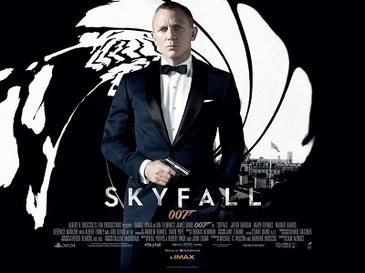
Bond gets shot, he's presumed dead, but he's not, he briefly retires (i.e., bangs a few chicks), a terrorist attack occurs in the MI6 offices, M is targeted, Bond learns of the news, he comes back. He resurrects himself, coming to M's rescue. "Skyfall," the 23rd film of the franchise, is a superbly made Bond film. Exquisitely shot and designed, Sam Mendes really elevates the cinematic qualities that has always been necessary in a Bond film.
Lesser directors often come up short so Mendes deserves a lot of credit here. He also helps make Daniel Craig seem revitalized playing James Bond the third time around. He looks like he's having fun and gives the character the time to seduce and play coy with his female co-leads. There's an old-fashioned feel towards this James Bond film but there's also plenty of fresh faces playing familiar characters: Ben Whishaw as Q and Naomie Harris as Moneypenny. Judi Dench is always reliable playing M, presumably for the last time. They each bring their own bit of fun and are well-drawn out characters even if Q doesn't get a lot of screen time.
The person responsible for the terrorist attack against the MI6 building as well as the threats against M is Raoul Silva, played by Javier Bardem. Bardem is an immensely talented actor whom I love to watch on screen, but I was a little cool on Bardem this time around. I'm probably in the minority on this, but while you can tell he has some fun playing this villain, I find Rauol Silva at times feels a bit too campy and I find the way the writers treat him to be a bit too cliche. Does he really have to be imprisoned in some isolated chamber? A place in which at least a half dozen villains in other movies have escaped from. In fact, one of those villains includes Loki from The Avengers... that came out six months ago for crying out loud.
Plus I feel like the film kinda loses its energy right around when we meet Raoul Silva, it leads to quasi-action filled climax in the third act, but I also found the way they set that up to be a bit off as well. Bond leads Raoul and his cronies to a secluded place called Skyfall in Scotland and basically plays "home alone" on them. Rigging the mansion with explosives and other traps for the bad guys to fall victim to. It's just not a very exciting place for a climactic action sequence, in my opinion.
Still, the film is so beautiful to look at. Roger Deakins, the cinematographer, is well-renown for his work in other films and Skyfall might be his best work. The sequences in Shanghai and Macau are just gorgeous and it really adds to the film. Plus overall, Skyfall is really fun and while I have some issues with it, there were a lot of positives from this film that really evened things out. Do yourself a favor and see Skyfall, if you love Bond, you won't be disappointed.
Grade: B+
Friday, November 2, 2012
"Flight" is well-acted, has interesting ideas, but ultimately misses the mark
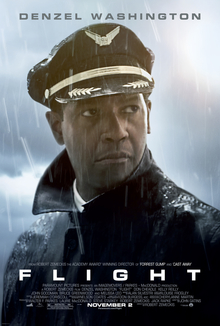
Whip Whitaker (Denzel Washington) is a commercial pilot who's about to embark on the last flight of his life. Remarkably, he manages to save 96 of 102 passengers on this ill-fated flight but the discovery that there may have been alcohol in his system, something that we are all well aware of from the beginning of the film, casts a shadow of doubt over the idea that Whip's actions was the act of heroism.
Rounding out the cast includes names such as Don Cheadle, Kelly Reilly, Melissa Leo, and Brian Geraghty who all put forth solid roles. Don Cheadle plays Hugh Lang, Whip's criminal defense attorney and is a part of the support system that Whip unfortunately chooses to neglect and deceive throughout most of the movie. The movie initially revolves around the plane crash, but then becomes exclusively about Whip's alcoholism. Director Robert Zemeckis and screenwriter John Gatins are quite relentless in their depiction of a man with this sad, never-ending vice.
But caught along the way, in this film, is a subplot that starts out promising enough but over the course of time, winds up getting in the way of the overall story instead of adding any layers to it. I'm talking about the relationship between Nicole (Kelly Reilly) and Whip. When the movie starts out, while we watch Whip go from his hotel bedroom to the cockpit, we are introduced to Nicole. She's a drug addict, struggling to pay rent and ultimately winds up in the same hospital as Whip after an overdose. These early scenes never really feel all too necessary as when Nicole and Whip finally meet, they proceed to have what feels like a ten-minute long conversation with a cancer patient as the three of them all smoke in the stairwell of the hospital. Anything we needed to know about Nicole, we find out anyway here, so what's the use of showing her story in the beginning when it breaks up the momentum of what winds up being a breathtakingly intense plane crash sequence?
Despite that though, it is interesting to see their story play out together as Whip catches up with her after his release from the hospital and winds up taking her in. But Whip never gets off the wagon, despite feeble attempts to do so, and it doesn't take long for Nicole to realize that staying with Whip isn't such a good idea after all, especially if she wants to stay sober.
The filmmakers had the right idea of not compromising while portraying Whip's battle with alcoholism, but Zemeckis frames and films the scenes in a way that makes it a tad melodramatic. Whip just can't stop drinking, no matter how hard he tries, but we don't really get to know Whip aside from the fact that he's a skilled pilot and alcoholic. We know he was married and has a 15 year old son, but we don't get that much back story. We don't know how or why he became an alcoholic, whether he got that from his father or anything like that. It's not as if a little more backstory would make Whip more sympathetic, but it would be nice to simply get more of a perspective on his addiction to make it feel more real and palatable.
As it is, the film ultimately feels like a two and a half hour PSA against alcoholism and it often handles the drama in a very uneven way, especially when John Goodman shows up in what's supposed to be the film's lighter moments. His first appearance in the film makes sense, his second appearance... and that whole sequence... while funny... just feels completely out of place tonally with the rest of the film. I won't give anything away, but it just doesn't blend well with the drama that occurs before and after.
Another point of contention for me is the use of music in the film. Gimme Shelter, Sympathy for the Devil, Feelin' Alright... songs that have been so played out in other films over the last thirty years that it adds nothing to the scenes they're in. At this point, they feel like stock soundtrack songs that filmmakers now use to portray cliches.
They had the right idea with this film though. They had it all laid right out there: the alcoholic pilot, his miraculous ability to land the flight, and his struggle between the possibility of going to jail for his erratic behavior outside the cockpit. All fodder for some great dramatic material, but I feel like Robert Zemeckis just went back into his old bag of dramatic tricks throughout the 140-minute running time instead of trying anything new.
As for Denzel Washington, his performance is rock solid throughout, no complaints here. But Denzel is always going to be Denzel, he wasn't exactly breaking any new ground here. His performance will confirm to you what you already know about him which is that he's a great, charismatic performer whose able to make you feel sympathy for him even when he plays unsympathetic characters. However, he doesn't do anything that makes you see him in a new light. Does he have to? No. He can be Denzel all he wants, just like Jack Nicholson will be Jack, Clooney will be Clooney.
Ultimately, an actor can only be as good as the material allows of him, and the drama in Flight is unfortunately very run-of-the-mill and it doesn't measure up to the thrilling, fantastic flight sequence that takes place in the beginning. By the time we reach the totally expected and unsurprising "court room" sequence at the end, the film pretty much writes itself.
Tightening the film in the second half and adding more depth to Whip's character would've really improved the dramatic aspects of the film. As it stands, again, despite a fantastic first half-hour, "Flight" just doesn't add up to a satisfying whole.
Grade: C-
Subscribe to:
Posts (Atom)