Showing posts with label review. Show all posts

Friday, December 13, 2013

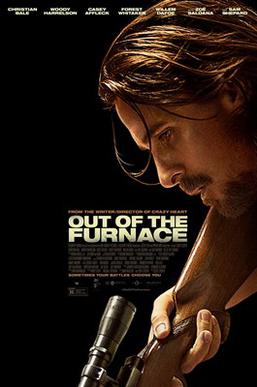
"Out of the Furnace" review


"Out of the Furnace" tells the most basic story you could possibly tell, given its setting. The story takes place in Braddock, PA which has a very isolated, desolate look with rows of sad-looking homes surrounding the towering, imposing steel mill where most of the townsfolk work. Braddock lies in the outskirts of Pittsburgh and the film puts much emphasis on just how grim this town is. The people who live here are simple, hard-working folk. They go to work at the mill, go to the bar to get loaded, then come home and go to sleep. This is repeated over and over, at least it is for our main character, Russell Baze (Christian Bale).

I liked the atmosphere of this film. The town itself feels deserving of a movie, with its characters trapped in their Rust Belt location, but I'm not sure this movie deserves them. The filmmakers do very, very little with their characters, stripping away anything that would make them interesting and focusing on the most basic details. So, ok, this is a movie that's going to focus more on its plot than the characters. That's fine. The problem is that you could pretty much predict the entire plot of this movie after watching the first five minutes. There's absolutely nothing surprising here. So many of these characters are given so little to do and its main character is literally kept on the sidelines for the entire first half of the film.

Russell is a hard-working honest man who happens to make the mistake of driving way too fast in way too drunk of a state one night. He winds up rear-ending a stationwagon, killing all the passengers in the car as a result. This lands him in jail. His girlfriend, who at this point we've only gotten to know for one brief scene, refuses to see him. Only his brother, Rodney (Casey Affleck), comes to check on him every now and then. When Russell winds up in jail, we are stuck in jail with him. The jail scenes feel like they last about ten minutes, maybe, and this is literally all that we see: Russell gets visit from brother, then wanders around jail, another visit from brother, then wanders around outside, then an inmate attacks him, then he gets another visit from brother, later he gets a tattoo, then goes to church, then sees his brother again, then gets released. If co-writer/director Scott Cooper is trying to make the point that life in jail is pretty much the same as life in Braddock, then man, point taken. But, just because their town and the jail has absolutely zero life to them, does that mean the same for these characters? If everyone in this town was that bored and lifeless, why aren't they all committing suicide?

The only character who has a little bit of life to him is Rodney, played by Affleck. Casey Affleck always brings this weird energy to every movie he's in. He's not your average actor. He plays his characters in such an offbeat way, which makes him very interesting to watch even in a film like this. What I realized, after watching this movie, is that even though Casey Affleck is always interesting to watch, Christian Bale can be uninteresting. I've never felt that before. Granted, I've never seen "Terminator: Salvation" which I heard was a very bad movie, but I've never felt so let down by a Christian Bale performance. He's way too restrained, way too passive, and I blame this on the way his character is written. He's just never given anything interesting to do until the plot requires it. It's as if he's literally waiting for the plot around him to advance so that he can have something to do.

Back to Rodney. Rodney did four tours of duty in Iraq, and like Russell with jail, it's made clear that Rodney's life in Iraq and in Braddock are not that dissimilar. He is actually told by his mentor, bar-owner/bareknuckle fight bookie John Petty (Willem Dafoe) that he's better off in Iraq. We believe him. Rodney doesn't want to work at the steel mill with his brother, even though their father worked there his whole life. So, Rodney has nothing to do all day. Naturally, this means he gets involved in bare-knuckle fighting contests. Even though he reveals himself to be one hell of a fighter with a lot of guts, he's repeatedly forced to take a dive. The first time we see him fight, he winds up winning the match even though he was supposed to lose. This drives John Petty crazy. He's supposed to take a dive, goddammit, what is he doing? "When I'm fighting, it's all a blur," says Rodney. Well, that's convenient. I don't know how bare-knuckled matches work, but I would imagine if a young kid who's just done four tours of duty wants to fight, you let him fight. You let him win, too. You bet on him, maybe. But whatever.

Despite the fact that Rodney cannot take the simplest of orders, he wants to keep fighting anyway. He wants to fight a couple of weird mountain folk in New Jersey. Why? Because we were introduced to them earlier in the movie, that's why. John Petty repeatedly tells him, you do not want to mess with these guys. Their leader, Harlan (Woody Harrelson), is a psychopath. We personally know Harlan is a psychopath because, when we're first introduced to him, he force-feeds a hot dog down a woman's throat. He's a real charmer, this guy. So, of course, Rodney wants to get involved with him because he's a naive, stupid kid. After repeatedly telling him no, John finally relents and gives the kid the fight he wants. Why? Because he apparently has a death wish for the both of them.

Thing is, we know that Rodney is gonna wind up fighting these mountain folk people as soon as we see them in the movie. We are not given any other possibilities. If Rodney doesn't fight them, the movie would come to a complete halt because there's really nothing else happening here.

The only other thing we see is Russell stalking his former girlfriend (Zoe Saldana). When he gets released from prison, his girlfriend has already left him. Once again, we don't know anything about this girlfriend, but she goes from intimately holding him in bed from never wanting to speak to him again. Still, Russell remains hung up on her. She represents the only glimpse of hope in his life, and he can't have her. So, he gives up.

What's so frustrating about Russell Baze's character is that he's too passive, and not particularly smart either. What makes this a problem is that we don't know anything about Russell aside from a few surface details (he has a brother, a dying father, an uncle, works at steel mill, etc.). We are not given anything else. He remains a closed book, and this just doesn't make him very exciting to watch. So when Russell finally has purpose in this movie, you start to realize that he doesn't exactly possess the mental capability to successfully pull off what he's trying to do.

When his brother hasn't returned from New Jersey from his bare-knuckled fighting match, Russell and his uncle wind up driving to the location themselves in order to find him and find Harlan, who is most likely involved in the whole ordeal. While this is where the movie finally starts to pick up, the way Russell attempts to find Harlan is really kind of stupid. And the whole sequence of events really doesn't amount to much, other than a stern warning from one of the town's policeman who tells Russell not to come back. Don't worry, he actually won't. He's that passive.

I'm just going to stop there because there's no point in trying to make sense out of this plot and these characters. "Out of the Furnace" is a film that's so in love with its own grimness that it fails to mine anything interesting out of its subjects. The most interesting character in the film is underused, and everyone else is barely used at all. Sam Shepard, who plays Russell and Rodney's uncle, is given nothing to do. Nothing! Forrest Whitaker, who's apparently the only police officer in Braddock, barely has much to offer. And even though Woody Harrelson tries to chew as much scenery as possible, the bad guy he plays here is so goddamn one-note that he seems no different than any other bad guy that you've seen in other movies.

There's nothing in "Out of the Furnace" that hasn't been done before. It places so much emphasis on plot details which makes you think something interesting will eventually unfold, but nothing does. The movie makes Braddock seem impossibly desolate. This might be an economically ravaged town, but there's no way these characters are that lifeless.

Everything about this film feels calculated. When Rodney is off to New Jersey, Russell doesn't know where he is. He treats this lack of knowledge with such passivity that you wonder why he cares when Rodney winds up missing. What makes it worse is that Rodney actually leaves a note in his room, addressed to Russell where he actually says he just needs to do "one more fight" and then he'll work at the steel mill with him. Not only is this such an unnecessary detail, but it also manages to make this movie even more cliched than it was before. Incredible.

There is one time, before Rodney is missing, that Russell is given something to do. He and his uncle grab a couple of shotguns and go hunting for deer at the very same time Rodney goes to NJ with John Petty. We know it's happening at the same time because it is cut that way. First, a shot of Russell and his uncle driving one way. Then, a shot of Rodney and John Petty driving the other way. They repeat these shots multiple times. Yes, they're both driving further away from each other and something bad is going to happen to Rodney, we get it, thanks for making it blatantly obvious the entire time. The intercutting between Rodney fighting and Russell deer-hunting just makes it even worse.

I think the main problem with this movie is that because it's so deliberately paced, you think it would be a bit more subtle. That is not the case here. Everything is as straight-forward as possible. A good example of a straight-forward movie would be "Prisoners," which is also very plot-heavy but it has enough surprises and left-turns that it keeps you guessing throughout. "Out of the Furnace," on the other hand, is devoid of surprises.

Either this movie should have been 10-15 minutes shorter, or thirty minutes longer where the characters are given something to do that goes beyond the basic plot line. Because, honestly, I actually liked this world. I like the idea of this film. I know I've been hard on it throughout this review, but really, I like where this film could have gone. The movie that unfolded in my head was way more interesting than what actually unfolded. There were so many ways they could've salvaged this and yet they never did anything here that was unexpected. Plus, we are never given the chance to get emotionally involved with these characters. I've never seen Scott Cooper's first film "Crazy Heart," but it garnered a lot of awards and praise for its star Jeff Bridges, so I assume Cooper is a talented fella. But when you manage to make even Christian Bale look lifeless, that's something that's hard to forgive.

Grade: D+

Monday, December 9, 2013

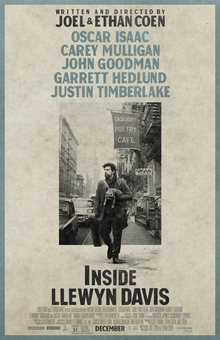
"Inside Llewyn Davis" review


There's been a lot of talk these days about world building in movies. Filmmakers such as Guillermo Del Toro, Peter Jackson, James Cameron---they all create worlds with their blockbuster films. Whether it's middle earth in "The Hobbit" or Pandora in "Avatar," these filmmakers always get credit for how they meticulously craft these worlds. But when you think about it, The Coen Brothers have been creating worlds throughout their entire career. With a lot of their movies, it's not just the believable characters or the clothes they wear, nor is it how they talk. It's the look and feel of each of their films that really put them over the top, to the point where you can really get sucked into each little world the Coens create. Not all of their films are like this, but their best ones are. Raising Arizona, Barton Fink, Fargo, Big Lebowski---to name a few, these films have such distinct universes and it's the kind of thing the Coens have been mastering for the last thirty years. With "Inside Llewyn Davis," they've practically perfected it.

First, it starts with the cinematography. The Coens' longtime cinematographer, Roger Deakins, was likely too busy to be brought along for "Llewyn Davis" so the brothers hired Bruno Delbonnel instead. Delbonnel is perhaps best known for his work on films such as "Amelie" and "Harry Potter and the Half-Blood Prince," in "Llewyn Davis," he brings a very distinct and rather muted look. It's cinematography that doesn't call attention to itself, but rather, it helps to further authenticate this world. It makes sense as to why the New York Film Critics Circle singled out the film's cinematography when they announced their awards earlier this week. There have been many beautifully shot films this past year, but none serve the story as well as Delbonnel does with "Inside Llewyn Davis." It makes the cold weather in Greenwich Village seem even colder and the air inside the Gaslight Cafe even smokier. It adds so much depth to the proceedings and helps to make the fictional Llewyn Davis's story seem completely legit. There's a big difference between having a film look like it takes place in the '60s and making the '60s feel like the present as you are watching it. "Inside Llewyn Davis" does the latter.

It's 1961. One year before Bob Dylan released his debut album. Actually, 1961 is the year Dylan arrived in New York City and while he would later go ahead to become a big success and pioneer of the folk scene, our sorry hero, Llewyn Davis, is about fed up with it. He has no set residence, instead being forced to sleep on the couches of friends and acquaintances.

One thing that drives the drama of "Inside Llewyn Davis" forward is a bit of dramatic irony. Knowing what would later happen in the folk scene merely a few years later, it makes its sadder to watch this struggling artist appearing to be at the end of his rope. There's his former music partner who threw himself off the George Washington Bridge, there's his former lover who left him for Ohio, and his latest ex-girlfriend who doesn't want to speak to him. Oh, and she's pregnant, and she's demanding that he pays for the abortion due to the slight chance that the baby might be his.

Llewyn has gone solo, and he's paying the price for it. While he'll occasionally work as a session musician for some quick cash, it's his own music that he's passionate about. But, his latest album isn't selling. It's not that it's not selling well, it's not selling. Period. There's no question the guy has talent and potential, but he might just be a little ahead of his time. There's no money in the kind of music he's making, at least not yet. People want happy, novelty songs, not depressing, introspective songs. Llewyn Davis is at the right place but at the wrong time. You want to see him succeed, you want to see him make it, but after reaching dead end after dead end, you can't blame him for wanting to quit.

And that's really all what the film is asking for, empathy. Llewyn is not a perfect guy, his own stubborness is often what does him in. The Coens aren't asking you to feel sorry for him, as they never do with their characters. They just want you to understand him. Understand his plight, his situation. They're simply asking you to live with this guy for two hours and live in this insulated world of Greenwich Village, NY back in 1961, and understand the difficulties these artists went through.

The film has many humorous moments and they're all strictly character moments. The most broadly humorous moments in the film has to do with the cat (or cats) that Llewyn is forced to take care of. There are two golden-furred cats in the film: one that belongs to the Gorfeins (the parents of Llewyn's former partner) and another that's a stray cat. At one point, having lost the Gorfein's cat, Llewyn mistakenly replaces their cat with the stray. Once the Gorfeins realize it's not theirs, he winds up being stuck with this cat, and ultimately has to decide whether to keep it or leave it behind. The decision Llewyn makes here has heavy thematic implications, especially when he eventually returns to the Gorfeins and finds that their cat has found its way back home.

What struck me the most about "Inside Llewyn Davis" is this recurring theme of deja vu. The film opens and closes with the same moments, of Llewyn singing at the Gaslight Cafe then later getting beaten up in an alleyway. For a moment there, these two scenes actually seemed slightly different from each other and I think what the Coens are saying here is that they might as well be. The scene is a microcosm of what Llewyn has been going through since he began his music career: whenever there seems to be a sliver of hope, life winds up kicking him in the face. There are many other moments in "Llewyn Davis" that have elements of deja vu, such as Llewyn once again sleeping on the Gorfein's couch, or the Gorfeins inviting him over for dinner twice and introducing him to two different sets of guests, both eager to try one of Lillian's "famous meals."  Another, bigger example of deja vu would be his most recent ex-girlfriend (Carey Mulligan) demanding that Llewyn pay for her abortion. This is two years after Llewyn dealt with a similar situation with a previous ex-girlfriend. It just appears that Llewyn keeps going through the same motions, the same mistakes, with no end in sight.

Now, admittedly, it can be difficult to watch a likable character such as Llewyn have such bad luck. I don't think the Coens are being cruel, but are merely pointing out that Bob Dylan's success was such a one-in-a-million shot. Sure, he wound up being one of the greatest songwriters of our time, but who knows how many Bob Dylans there were in Greenwich village that wound up having Llewyn's fate?

So much of the film relies on the talents of Oscar Isaac, who plays the title character. Isaac plays Llewyn Davis with the perfect touch. He allows the character to be both flawed and incredibly watchable. I could've watched Llewyn Davis's unlucky adventures forever, except maybe when he's driving to Chicago and back. That's really the only moment of the film that kind of dragged for me and I wish more was done with the characters played by Garrett Hedlund and John Goodman, but that's a very minor complaint. It was still fun to take a ride with John Goodman's character, Roland, even if he's on screen a lot less than I expected. Plus, the Chicago sequence can also symbolize just how long, winding, and empty Llewyn's life has been as a musician and how it seems to be going nowhere.

Another standout in the film is Carey Mulligan, who plays Jean, Llewyn's former girlfriend. She has nothing but contempt for Llewyn and she winds up having some of the funniest lines in the film. Mulligan really goes all out, to the urging of the Coens, making Jean simultaneously mean-spirited and adorable. I don't always love Carey Mulligan, but this film reminded me just how great of an actress she can be. She manages to give Jean enough layers, making her believably angry at Llewyn, instead of merely playing up the mean-ness for laughs.

"Inside Llewyn Davis" is pretty much a must-see for anyone who's ever been a struggling artist, or really, anyone who's ever struggled. It's a very relatable film on many levels, despite how specific the time period is. It manages to give you a very authentic glimpse of the life of a folk musician in the early '60s, while also being a careful examination of the hardships people have to go through while trying to reach the next stage of life. In Llewyn's case, he could very well wind up giving up his dream. But the film doesn't really give him any other viable life options either. He's stuck. For how long, who knows? But it was a pleasure getting to know him, nonetheless. When Llewyn Davis sings, he's not asking for help, he just wants a little empathy. And perhaps, a couple of dollars... and a couch to sleep on if it's not too much trouble. This is one of the year's best films, and a movie that begs to be seen more than once. The Coen brothers have created a world that is definitely worth revisiting.

Grade: A

Wednesday, May 29, 2013

"The Way, Way Back" will make you want to go for a nice swim, it's also a pretty good movie


When we first meet Duncan, he's in the very back seat of a stationwagon and he's not having a very good time. He's on his way to a beach house to spend time with his mother and her boyfriend for the summer. It's a nice house bordering the shore, lots of cute girls, parties, etc... but when you're an awkward teen being thrown into the perils of divorce, all that fun stuff can blow right past you. Duncan is mostly grumpy, trying to adjust to life with his mother and her boyfriend, but the boyfriend, Trent, (played by Steve Carell) isn't really helping matters.

Trent flat out asks Duncan to rate himself on a scale of 1 to 10. After much goading, Duncan finally answers. He thinks of himself a "6." Trent, on the other hand, thinks he's a "3." Not a great way to try to get along with your girlfriend's son, but we'll soon learn that Trent really is kind of an asshole. That said, Duncan doesn't exactly help. Should he try to be happier, for the sake of his mother? Perhaps, but "The Way, Way Back" is smart in that it showcases how these beach house trips really isn't about the kids at all, but more like "Spring Break for adults," as one kid wisely observes. So, it's understandable why a lot of kids in the area aren't exactly thrilled to be there. The trip is all about the parents, with very little time spent with the kids. What's a teenage boy to do when you're stuck in a place you don't want to be? Well, in this case, you bump into Sam Rockwell (his character, that is).

To be honest, while "The Way, Way Back" starts off nice enough, you will be breathing much easier once Sam Rockwell enters the screen. His character, Owen, brings such necessary life and spirit to the film and things really move along smoothly when he's on screen. He's such a strong on-screen presence that the rest of the movie begins to suffer in comparison. Duncan and Owen wind up bonding and Duncan gets a job at Water Wizz, a water park Owen manages. Thanks to Owen, Duncan begins to lighten up a bit more and becomes a hit with the guests (who apparently go there everyday). Duncan even begins to put the moves on Susanna, a cute girl who stays in the beach house next door. But when Duncan bikes away from Owen and Water Wizz and has to deal with the drama going on at the beach house, the tone just feels too wildly different.

What "The Way, Way Back" also suffers from is having a mopey lead character. There are a lot of coming-of-age stories that have this problem. I highly enjoyed "The Perks of Being a Wallflower," but the lead character was probably the least interesting of the bunch. Same is the case here. Duncan is not even the "straight man," he's just brooding. He loosens up when he starts working at Water Wizz and once that happens, the film becomes much more enjoyable. But again, because the water park scenes are so fun, it makes the more dramatic scenes at the beach house kind of a chore to get through.

This might be because it's made by first-time directors. Nat Faxon and Jim Rash were part of the Oscar-winning three-man writing team behind "The Descendants." Alexander Payne, of course, was that third member of the writing team and he directed the film. "The Way, Way Back" has a similar feel to "The Descendants." It's very laid back, a little free-wheeling, but because the main character isn't as fun, the dramatic moments are harder to get through. "The Descendants" worked mostly because George Clooney oozes charisma and you felt for his character, in "The Way, Way Back," Duncan is just a whiny teenager. You understand what he's going through, we've all been there, but sometimes you wish he'd just lighten the hell up. His anger is sometimes justified, but other times, he's just a bit too sensitive. It's hilarious to watch Sam Rockwell's Owen bounce off Duncan, but it seems Faxon and Rash had some difficulty finding that right tonal balance that Alexander Payne is such a master at.

That said, "The Way, Way Back" is still a very solid, often enjoyable film that has a great cast. Aside from Carell, Sam Rockwell, and 16 year old Liam James who plays Duncan, there's also Toni Collette, the always wonderful and underrated Allison Janney, Maya Rudolph, Rob Corddry, and Amanda Peet. I actually think it should be a requirement for Allison Janney to appear in dramadies like these. She's always very memorable when she plays these types of roles, best exemplified from her turn in "Juno" where she plays the title character's step mother. She's just a pro and she gets the second best lines in the film (Sam Rockwell comes out on top in that category, sorry).

And yeah, can't say enough about Sam Rockwell. Rockwell is at his best when he's given the chance to be loose and just shoot the shit. He deserves to be in more comedies. Steve Carell is also memorable as the dickish 40-something boyfriend of Duncan's mother. This role is a great change of pace for Carell who usually plays likable guys. He showcases here that he can play a pretty convincing jerk. Good for him.

And while I do think Faxon and Rash's debut film has a few problems, I am really interested in seeing more films from them. "The Descendants" was Alexander Payne's most laid back film and I really enjoyed the way that film was paced. "The Way, Way Back" shows the writer/directors' were just as much responsible for "The Descendants" being as successful as it was. If they can just correct a few kinks here and there, they can wind up having solid directorial careers.

It could stand to be a little more fun, but "The Way, Way Back" is a good film with a great cast that will make you want to start looking for your swimming trunks.

Grade: B

Tuesday, May 28, 2013

"The Hangover Part III": a fitting, mostly funny conclusion to an uneven trilogy


"The Hangover" is a film that, when it came out, it was an instant classic. Not only that, it exploded in the box office and everyone and their mother went to see it and laughed their asses off no matter how depraved it was. Sequels were inevitable, having the sequels being constantly measured up to the first one would be inevitable as well. With "The Hangover Part II," Todd Phillips decided the best way to go about that would be literally copy the formula of the first film, to almost an exact science. Not only was the setup and payoff the same, many of the jokes were similar as well. It was an experiment in self-plagiarism. Todd Phillips tries to deny that the two films are basically the same, after all, the second one's in Bangkok! I mean, come on! But if "The Hangover Part II"was made by someone else and was never called "The Hangover Part II," you can bet Todd Phillips would be crying foul. I guess when you make a film that crosses $500 million in the box office, denial becomes your best friend.

The first thing that becomes clear with "The Hangover Part III" is that it's not a carbon copy of the first one. Thank God. Instead, the film heavily references events that transpire in the first movie and apparently Alan's (Zach Galifianakis) actions have set a chain of events that has made John Goodman's character very pissed off and looking for blood. In the third one, the Wolfpack have to go to Tijuana to find Leslie Chow (Ken Jeong), who had stolen $21 million of gold from Marshall (John Goodman). They must find him and bring him to Marshall or else Doug (Justin Bartha) gets killed. Trying to find Leslie Chow ultimately leads them back to the place they hoped they'd never have to come back to, Las Vegas.

Basically, the plotline for "The Hangover Part III" is very, very, very standard. What made the first movie so fun was how original its concept was. It was an R-rated mystery comedy. This time, the plot structure is your standard thriller. We will kidnap your friend (or lover or child) and will kill that person unless you bring us Chow (or money or whatever). So it's a very basic plot and basic structure. Nothing happens in the movie that would be coming from left-field, except maybe one scene involving a giraffe.

"Part III" is an average comedy. The bad news being that it's definitely a step down from the first one, but the good news? It's a vast improvement from the second.  "Part III" doesn't do anything special, but it at least provides another good showcase for these characters to play off each other and, after looking at some of the critics reviews, I was surprised at how often I laughed. Some claimed the movie goes into flat out "thriller" territory and stops being funny, but I definitely disagree. There are still plenty of funny scenes in the second half. Leslie Chow is still an annoying character and Ken Jeong has pretty much worn out his welcome for me, but he's definitely not as annoying as he was in the second one.

Perhaps it's because I hated the second one so much that I was able to enjoy this one much more, but I don't think that's completely the case. The truth is, I like these characters. I like Stu and Phil (Ed Helms and Bradley Cooper). I think Helms, Cooper, and Galifianakis are great together. I was wondering when Mike Tyson was gonna show up, he never did, but I still enjoyed seeing these characters back together without doing the same exact things that they did in the first two movies.

I liked the inclusion of John Goodman as the bad guy as well. The general public largely doesn't realize just how nasty John Goodman can get so it's nice to see his mean-spirited-ness on full display here.  I love that he's appearing in more movies once again.

And even though the third one does have a very basic plot, it's still fun to see how it ties in to events that happened during the first movie. It's also nice to see Alan's character mature a little bit and the return of Heather Graham and her son (Carlos!) is nice as well. Sorry critics, this isn't as terrible as you're claiming this to be. It's not great and it's very formulaic, but it's a step up from the second film and, overall, a pretty fitting, mostly funny conclusion to the trilogy.

Grade: B-

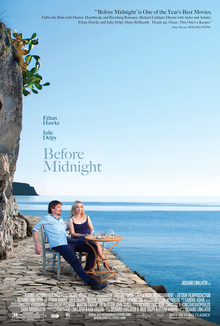
"Before Midnight" is another welcome entry in the "Before" series


It's nine years later. Jesse and Celine are together... finally. They have twin daughters. They have a whole life together. They felt a deep connection with each other when they first met 18 years ago, then nine years later, decided to act on that connection. And now here we are. "Before Sunset" ended on a suggestion, "Before Midnight" shows the result. Jesse and Celine are together and now have to deal with the consequences of real life. While Jesse asked Celine to travel around Vienna with him on a whim in "Before Sunrise," "Before Midnight" shows how those moments of spontaneity can have all kinds of long-lasting effects. If Jesse had known that taking a brief detour with Celine could impact his future son's life, would he have done it still? Was it all worth it?

Better yet, if the events of "Before Sunrise" took place in 2013, would any of this matter? "Before Midnight" not only explores the continuation of Celine and Jesse's relationship, it also explores how technology has greatly impacted the modern relationship. Jesse and Celine could not communicate for nearly a decade after they met in "Sunrise." But on their trip to Greece, they meet a young couple who had met and fallen in love in Greece, kept in contact via Skype, and were able to keep that relationship alive. The fact of the matter is, that nine year block when Jesse and Celine weren't together has caused a permanent strain on their current relationship. Jesse now has a 14 year old son that lives in Chicago and can only visit during the summer. He wishes he can be closer to his son and be more of a presence in his life. But these are things Celine doesn't want to hear.

Overall though, how are Celine and Jesse these days? Well, they're a lot of things. They have their ups and downs like any other couple. Suddenly, reality has made their incredibly romantic story incredibly... normal. They are passionate, they can still have involving conversations with each other, but they also fight. They fight a lot. And "Before Midnight" climaxes with an incredibly ugly fight where many things are said, feelings being thrown around with reckless abandon, literally preventing them from what was to be a planned romantic night.

"Before Midnight" not only works as a welcome third part of an amazing trilogy, but it also provides amazing insight into the life of a committed couple, now into their 40s, that is so life-like that watching them fight in a hotel room will make you cringe. It's not that either one of them are right, that's exactly the point. They have their own agendas that they're pushing towards each other, their arguments are such that it's impossible for either to be right. What originally had them fall for each other is now what makes them fight all the time. They're both passionate people, from different ends of the spectrum.

These issues were touched upon in Judd Apatow's "This is 40," but obviously those circumstances are a bit different. In "This is 40," Pete and Debbie are going through mid-life crises and that, in turn, affects their love life. But "Before Midnight" is much more consistent and really puts the microscope on these feelings. "Midnight" has long scenes of just conversation, like the previous two films, where ideas are explored from multiple perspectives. At the end, nothing is necessarily resolved but you get the feeling that this is just another fight. Celine and Jesse are meant to be together, they were made for each other. They will have their bitter fights, but there is still something there that keeps them together. There's an unspeakable bond.

Director Richard Linklater has been all over the map in the past ten years, as a filmmaker. But, when he returns to this material, he handles it as deftly as he did the previous two times. The only thing this film is missing, that the previous two had, was a sense of time running out. In "Sunset" and "Sunrise," Celine and Jesse eventually had to part ways, or at least that is how those stories were framed. Therefore, it automatically made their day carry emotional weight. Each minute that passes by makes it closer to the inevitable. But here, there is no parting ways. They made a commitment to each other and this is it. So while the film is a necessary and logical next step in their relationship, it's not quite as compelling overall as the previous two films. Other than that, the film is a delight, and a must-see for fans of "Before Sunset" and "Before Sunrise."

Grade: B+

Tuesday, May 21, 2013

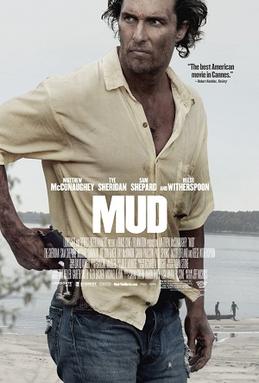
"Mud" review


"Mud" plays out like a modern day fable, in some ways. You have two boys, Ellis and Neckbone, making their way to a small island via motorboat where they discover a large boat stuck in a tree. That's where they come across Mud (Matthew McConaughey), a former native of the region who has just returned, hiding out on the island because he shot and killed a man, a man who threw Mud's old girlfriend (Reese Witherspoon) down the stairs, causing her to lose the baby she was carrying. In the course of helping this potentially dangerous man, Ellis learns about the nature of love and trust, in all their pratfalls.

Every character in "Mud" deals with love in their own way. Neckbone, unaware of who his real parents are, only has Uncle Galen (Michael Shannon) to look up to and Galen treats his women like objects. Ellis's parents are going through a painful divorce that will wind up forcing him to move out of the houseboat that he's spent his whole life in, forcing him to live in the town. He has a "girlfriend" named Maypearl who, after one date, doesn't give him the time of day. Ellis wants to help Mud because he believes Mud truly loves Juniper, an old girlfriend that's back in town, looking for him. But does Mud love her? Does Juniper love Mud? To Ellis, the issue is black and white, but of course we know there's more to it than that.

There's a point in all of our lives where we start to realize that what we know about our parents, what we know about love and marriage, goes beyond what we can comprehend. We assure ourselves, and others assure us, that it's because we're not old enough to understand, but the truth is it's beyond understanding. Mud is just as childish as Ellis is when it comes to love, killing a man to protect his "true love" without thinking through all of the consequences. No matter how old we get, we still have so much to learn about life. By the time we've got it all figured out, it's too late. Like Tom Blankenship (Sam Shepherd), an old man who lives in a houseboat by himself. Ellis wonders what Tom's story is. How did he get to be so lonely? Then we come to find out that Tom lost the love of his life, and it's left him heartbroken and alone.

We're all the product of our own environment and sometimes our environment can be so overbearing that we feel we owe to ourselves to get away from it all. While Ellis and Neckbone can't imagine being anywhere else, nearly all of the adults in "Mud" are looking to escape. Mud is trying to escape via the boat in the tree, Ellis's mother wants to escape her husband and leave the houseboat behind, Juniper is in a more complex situation. Part of her wants to escape with Mud, another part of her simply wants to escape... period.

"Mud" is a wonderful film because it has such a thematically rich story with actors that sink their teeth so well into these roles. The film reminded me of "Winter's Bone," which was another coming-of-tale set in an area where people have their own language, their own code, their own way of living. "Bone" is a bit more stark with a tough bitch of a main character, whereas "Mud" is a bit more hopeful. Things are bad, but they can get better. There's an element of danger in "Mud" that feels real, whenever Ellis goes out to give Juniper a letter, you're hoping that nobody is watching or following him. The dramatic points are downplayed so beautifully, the tension is created so naturally and gradually that it sneaks up on you. By the time we get to the climactic scene near the end, it's simply chilling.

Matthew McConaughey continues to impress with yet another strong performance. His character, Mud, is so many things at once. You don't know whether to feel bad for him, to be afraid of him, or to look down on him. Reese Witherspoon is also great as the torn lover, who tries hard to wait patiently for Mud, but just can't. And while Sam Shepard is as solid as usual, it's Tye Sheridan who has the most important role here. He was as compelling here as he was in "The Tree of Life," the 14 year-old Ellis is so layered and relatable, it's easy to get sucked in.

"Mud" wraps up a little too neatly for my taste and while I appreciate its thematically-rich story, I did think it was too on-the-nose in some places. Nevertheless, "Mud" is a wonderful Southern drama you won't want to miss.

Grade: B+

Thursday, May 16, 2013

Everything I have to say about "The Office"


I was 17 when the first season of "The Office" came out. I remember the advertisements on NBC. Starring Steve Carell with... unknowns. Seriously. Rainn Wilson? John Krasinski? Jenna Fischer? Who are these people? Now I can't imagine a world without Stanley, Kevin, Oscar, Angela... let alone Jim and Pam.

But, let's go back to that first season. Here's the thing... I refused to watch it. I had already bought the first season of the UK version of The Office with Ricky Gervais and I thought it was hilarious. Drop dead hilarious. I later got my hands on season 2 and the Christmas Special and I was a genuine fan of the UK Office. Now NBC is going to try to remake it? Give me a break.

Steve Carell's star was just rising at that point. I remembered him mostly from The Daily Show and his roles in Anchorman and Bruce Almighty. There's no doubting he was very funny, but this was before he really broke out with "The 40 Year Old Virgin" which came out later that summer. So, to me, the US Office really had no chance. More established actors have failed in that position Carell was in. What was he going to bring to that regional manager position?

Of course, what I failed to realize at the time was a few things. First of all, Greg Daniels was spearheading this American Office. I did not know who that was nor did I care at the time, but if I had done my research I would have felt much better. This is the guy who co-created "King of the Hill," wrote for "SNL" during the late '80s, and was a writer on "The Simpsons" for a few years. This guy had solid credentials, later solidified even further with "Parks and Recreation."

But the other thing I did not realize was how easy it was to adapt the British Office into American sensibilities. After all, they wound up becoming two very different shows even if they started very similarly. The pilot episode of the American Office was almost a carbon copy of the British series. Almost to a tee.

Come to think of it, it's almost amazing how much I revered the UK Office because it only lasted 14 episodes. While Ricky Gervais and Stephen Merchant did a remarkable job of making the show re-watchable, Greg Daniels and his team of writers were able to really expand on what Gervais/Merchant started. Even if you think the American show lost its luster after the third season, that's still about 50 episodes right there. Fifty episodes of solid television.

And it's to my opinion that the show, honestly, was pretty damn good until around season 6. The moments Dunder Mifflin became Sabre was when it started to crumble for me. The show was barely getting by making Jim Halpert co-manager but the wedding episode and baby episode were very memorable even if it all kinda entered "Friends" territory. NBC desperately wanted those episodes to be "Friends" moments, no doubt. But "The Office" could never be the ratings juggernaut "Friends" was. Why? I don't know, but it just couldn't. It still had solid ratings throughout its run and has remained one of the few bright spots, ratings-wise, in NBC's lineup. But, "The Office" wasn't the "event" type of show like "Cheers,"  "Seinfeld." and "Friends" were. I consider "The Office" to be among the best shows of the 2000s, but we all know that the finale isn't going to have gangbuster-like ratings. It's never been that kind of show. But you know what? It never needed to be.

Indeed, "The Office" was a show that hit its peak very quickly. That first season had the difficult task of living up to its British counterpart, but when the second season rolled around it very quickly forgot that there ever was a British counterpart. Instead, the show's writers were giving us reasons to care about Jim/Pam, and making us love and hate Michael Scott. Some say Jim and Pam's "will they/won't they" storyline was what carried those early seasons, but if Michael Scott's character did not work, the show would've fallen apart. Steve Carell never won an Emmy for his performance as the clueless boss, but he should have. He wasn't as mean as David Brent, but that was exactly what made him work. He was a moron, but only because he was so lonely. Once you realized, "wow, Michael Scott really thinks the office is like his family," it really started to make sense. In fact, the character of Michael Scott wound up becoming so rich that when Carell abruptly left towards the end of season 7, it just wasn't the same. Some thought the supporting characters could pick up the slack with the help of Will Ferrell and, later, James Spader. But, if anything, they just reminded us how valuable Steve Carell was. When you watch those first seven seasons, even the latter two seasons which weren't as good, that comfort of seeing Michael Scott, you can feel that. The show simply worked when Michael Scott was there. Not every episode revolved around Michael Scott, but Steve Carell was able to blend goofiness and stupidity while simultaneously remaining lovable. He did it so well that we took him for granted. The other characters took him for granted. The look on their faces when Michael announces that he's moving to Colorado with Holly seals it. They were silent. "I wish Michael would leave," soon became "What? You CAN'T leave!"


There was something about Jim and Pam, though, wasn't there? The funny thing, and this might be tough to admit, but their love story actually indirectly mirrors Ross and Rachel in "Friends." Ross longs for Rachel all throughout season 1. Then Ross gets a girlfriend and suddenly Rachel longs for Ross in season 2. Then they wind up together. Of course, then they broke up and "Friends" went back and forth with this couple over and over again. With "The Office," the feeling is a bit more mutual from the get-go, but Jim, as Phyllis would say it "really had it bad for" Pam. I mean, watch those season 2 episodes again. It's all too evident. And it's not that Pam didn't feel the same, it's that she couldn't find the courage to get out of her relationship with Roy. That relationship that seemed as if it would never go anywhere. They're engaged but forget about getting married. They used to have a date set, but now they don't. Roy kept messing with Pam's emotions, but she stuck with him because she was loyal. Still, she couldn't ignore the attention Jim gave her everyday.

What made that second season so great was those emotional climaxes. Whether it was the "Booze Cruise" or "Casino Night," the writers did such an amazing job of having all these little storylines, but bringing the Jim/Pam storyline to center stage when it mattered most. That moment with Jim and Pam on that boat where they are just staring at each other in silence is one of my favorite moments in TV. It said everything about what they felt about each other, but nothing was actually said.

And of course, "The Dundies" signaled the escalation of their relationship when Pam started drinking a little too much and got a little too hands-on with Jim. She was acting on her impulses. It's as if she always had the impulse to kiss Jim or to say what she felt, but just couldn't. Remember when she said, "I have a question" but followed that with "...I just wanted to say thanks"? Those little moments are what made season two such a joy to watch. And as that season continued, Jim's frustration and the inability for Pam to break it off with Roy continued to mount the tension until "Casino Night" when they finally kissed. What should have been a special moment was mired by the fact that it was simply too late... Pam's getting married to Roy, Jim's going to Stamford. It felt real at that moment. No, it's not in Pam's character to suddenly break off her marriage just like that. Remember in "Frasier" when Daphne literally left the altar to be with Niles? Yeah, that was the moment I stopped watching "Frasier." Things like that don't just happen in the world of "The Office". That was reflected very accurately in that episode.

Then the writers did a smart move. Pam does break it off with Roy, but in between seasons 2 and 3. Now Pam's single, but Jim's in Stamford. And thus begins my all-time favorite season of "The Office." The season where the show really made its peak. Season 3 was so much more complex than season 2 and yet it was equally hilarious. At first, it juggled Jim's situation in Stamford with the office in Scranton. Then, it ingeniously integrated the Stamford branch with the Scranton branch, something that was signaled during the first two seasons. The writers made it work. And they added a major character in the mix: Andy Bernard. Karen Fillipelli was also a great character and it's a shame that her character was toast once Jim broke it off with her because Karen was never a villain. Karen was a hard-working careerwoman who understandably developed a crush on Jim. Because Jim is adorable. Who, other than Angela, wouldn't have a crush on Jim? He's just that kinda guy.

Karen, I'm sure, had too much self respect and control to wind up having a thing for a guy at her office. But of course Jim had to come around and ruin that for her. One wonders what would have happened if Scranton and Stamford had never merged. Would Jim and Karen have gotten married? Would Jim eventually be able to forget about Pam? When Jim's buddies in Philadelphia offered him a job that would finally get him out of Dunder Mifflin, would Karen have stuck by his side the entire time? I think so. Karen, it seems, is much more independent than Pam is. She liked Jim, a lot, but she still wanted to move up in her career. And I'm sure if she was married to Jim, she'd want him to be successful too. Would Jim have gotten more out of that relationship? Maybe. But, of course, that's just speculation. As fate would have it, Jim and Pam were simply meant to be together and Jim was meant to be at Dunder Mifflin for as long as Pam's there... until the series finale.

I love season 3 because adding Karen to the proceedings made the tension between Jim and Pam even more palpable. Now Pam is the one actively pining for Jim and Jim is the one stuck in a relationship with someone else. Some of my favorite moments of season 3 are actually between Jim and Michael Scott. The moment were Jim and Michael are sitting together at the Christmas party and Michael is lamenting having lost the Benihana server, the two have a nice little moment together with Jim assuring Michael that she was just a rebound, with words that strongly implicate his feelings towards his own relationship with Karen. It's nice at the beginning, but soon you just go back to thinking about the one who broke your heart.

Jim and Michael Scott had a lot of great little moments like that together. In season 2 on the "Booze Cruise" when Michael flat out tells Jim not to give Pam up. And that hilarious episode "The Secret" when Michael starts imitating Jim's looks, wanting so badly to be his best friend. Then in season 3 at "The Convention" where Jim shows up at Michael's hotel room and they have another heart-to-heart regarding Jim's feelings towards Pam. Those moments were what really showed a lot about Michael's character. Michael was, as a matter of fact, someone you could confide in if you got to him at the right moment. When his guard is finally down and he's not too concerned with being the entertainer all the time, he's able to really show that extra dimension to his character.

Season 3 inevitably ends with Jim and Pam finally ending up together. It's a great moment when Jim interrupts Pam's interview in the conference room and asks her out. Her tears felt so real, it's hard not to get choked up while watching it. It's a vast improvement than in the pilot episode. Jenna Fischer has wound up becoming such a wonderful actress, but when Michael fake fires her in the pilot episode, it wasn't Jenna's finest moments. Her cries and her "You're a jerk!" line just felt flat and a little too forced. But watching her in that final moment of season 3 will make your forget about that pilot episode instantly.

The writers didn't seem to know what to do with Jim/Pam afterwards. There was never that tension anymore after season 3. Jim and Pam from seasons 4-5 were a young couple in love. With a show built so much on this emotional tension between the two characters, having them finally get together felt like a let down. The writers never managed to get that tension back. There was no merger. Nobody was leaving anybody. You had Dwight breaking up with Angela, but over a bunch of silliness. While Rainn Wilson had a lot of great moments and Dwight's character really started to be more three-dimensional in season 4, you simply didn't care as much about the Dwight/Angela storyline. The Andy/Angela/Dwight love triangle had a lot of laughs, but it wasn't until Michael/Holly in season 5 where you started to realize what made the show so unique.


The show's greatest strength has always been its romance. Those real moments between characters that go past typical sitcom tropes. Michael had relationships before Holly, but his relationship with Jan was too farcical to have any emotional resonance. But with Holly, he really seemed to have found his match. But after six episodes, Holly was gone. Gone way too fast. That was a huge mistake. While Holly leaving lead to some nice moments, like at the end of "Business Trip" where Michael unloads at David Wallace for forcing Holly to transfer to Nashua. I loved that moment because that was one of the few times you saw Michael really let out his true feelings to someone else, especially to someone like David Wallace. They really should have let that relationship build during season 5 because I really think it would've made season 5 another classic. Instead season 5 was a lot like season 4. It had some really great episodes, some good episodes, but it was clearly a notch below seasons 2 and 3. The one shining highlight of season 5 was the Michael Scott Paper Company storyline, but again, that seemed way too short lived. They finally broke the format a little bit with the Michael Scott Paper Company but seemed way too desperate to bring the show back to the status quo. The fifth season ended on a great moment between Jim and Pam, but it was the first sign that The Office was going into "typical sitcom fare" territory.

By shortening the Michael/Holly storyline in season 5, I feel like her return in season 7 just didn't wind up being as emotional as it should have been. The writers were really trying to force the idea that they were soulmates who were meant to be, but overall, they made Holly's character seem rash and a bit flighty. Why even have her be in a relationship with her then-boyfriend AJ at that point? It just created an unnecessary obstacle and you knew they were going to end up together ultimately, especially since we all were aware that Steve Carell was leaving that season. We all knew Michael and Holly would end up together, and it was nice that they did, but the fumbling of that storyline was a sign of things to come and once Michael finally left in "Goodbye, Michael" the show would never be the same.

Season 8 was just plain unwatchable. I mean, I watched it, most of it. But man, it wasn't easy. Robert California just sucked the life out of everything. His character was just too aloof and added nothing except frustration to the show. There was no storyline, there wasn't anything substantial going on. It was really hard to watch.

Another thing that started to get old by this point were all the office relationships. Kelly and Ryan was always just played for laughs, so whatever. But Dwight/Angela and Jim/Pam were just going nowhere at this point. Jim and Pam were just... a married couple. That's fine. I can live with that. But what they replaced Jim/Pam with was... Andy and Erin. Now that we know what eventually happens to them in season 9, I feel so jipped. Because Andy and Erin was, at times, a really cute storyline. Erin was a quirky, lovable character. She was always the brightest spot on a show that was going downhill. Andy started off being a great character. The smug Cornell grad who wasn't a great salesman and was a nuisance to both Jim and Dwight. He integrated so well with the rest of the Scranton branch because his character stood out enough and was funny. He was annoying and best in small doses. But, overall, Andy was a solid character from seasons 3-7.

Then they made Andy the branch manager and that was that. Andy, very quickly, became the most annoying character on the show. By the time season 9 rolled around, you just wanted him to leave the show. They started off by mirroring Andy's manager antics with Michael Scott's, and then they made him a giant douche who doesn't care about anyone but himself. And then the Andy/Erin storyline just crapped out.

Jim and Dwight always had an interesting dynamic that I feel was left mostly unexplored in the latter seasons. Their relationship definitely evolved from merely being foes to becoming an effective team (albeit with wildly contrasting personalities, which made it all even funnier). They showed in season 3 that they're actually a killer sales team, but that was never explored again. Occasionally you'd see Dwight let his guard down with Jim or Pam, but when they finally made Dwight kinder to Jim towards the end of the series, it left you wondering... "where is this coming from all of a sudden?" Because Jim and Dwight working together actually made for some hilarious moments. Like in season 5 when they have to throw Kelly a birthday party, or in "Customer Survey" when they find out Kelly is the one giving them bad reviews in their customer surveys. A lot more comedy could have mined between them, but they stuck to the old "Jim and Dwight are foes" antics for way too long that when they finally started working together towards the very end, it felt like a missed opportunity in those last few seasons.

"The Office" peaked early and slowly started to get worse with each season. And yet, I found myself watching regardless. I stuck with the show since season 2 because I loved those characters so much. Watching "Finale," I find myself wishing for more Michael Scott. I wanted more Stanley, more Toby. I wanted to see Karen again, or even Roy. These are characters that I'll think about for a long time. Now that Jim and Pam's story is said and done, despite my reservations about the latter seasons, I think it's the best love story ever portrayed in a sitcom. It just grew so naturally. Even when the drama plateaued in the latter seasons, it was still nice to see these people find each other and be so close with each other. Some relationships can last and can hang in there for the long run. It may be boring at times, but life is boring sometimes too. I just wish they had more to do in those last couple of seasons.

I'm glad they made more references to the documentary crew in season 9 and how it stuck close to the UK Office by having the documentary actually come out. That's how it should have been and they did that right. Still, it was weird seeing all these references to the documentary after 8 seasons. In the first two seasons, they referenced the camera a lot, but by season 4, they nearly forgot about them. Nevertheless, it was cool in a meta way to see the characters reference their past behavior, at the end of season 9, based on what they watched in the documentary. A nice touch.


But "The Office" is going to be one of those shows that I will revisit again and again. I will repeatedly wonder about the possibilities between Jim/Karen or Dwight and Pam's best friend (whatever her name was). I will continue to laugh at David Wallace's bemused expressions at Michael's antics. Or every time Michael says "That's what she says!" The show peaked early, but that peak was extraordinarily high. And the characters are so lovable that I can forgive just about everything else. "The Office" as a whole is amazing to me because it had so many characters and yet they each had their own footprint on the show.

Creed's weirdness, Kevin's stupidity, Oscar's smugness, Angela's bitchiness, Pam's sweetness, Jim's pranks, Michael's silly antics, and... pretty much everything about Dwight was great. In fact, the writers seemed to have the most fun at being creative with Dwight and his family's rituals. What got the biggest laugh from me in this last season was watching his family take out shotguns and shoot his aunt's grave to... make sure the dead is really dead. And again, in the finale, having Angela and Dwight stand over their graves while they get married.

Michael's re-appearance felt special, but in a painfully realistic way, felt so quick. The fact is, he's moved on. He had two lines in the finale and was typical Michael Scott, but he's done with being the center of attention. So while I was craving for more Michael, I understood and respect the way it actually played out. And I'm glad Pam and Jim are finally moving on from Dunder Mifflin. That was the least realistic thing about the show for me was this couple staying at Dunder Mifflin for... the sake of the show? Don't they want to do bigger and better things? The finale proves that they do.

I loved Seinfeld, I loved Arrested Development, 30 Rock, The Simpsons, but "The Office" is the only sitcom world I'd actually want to live in. I really wish I could work with those guys. That's how realistic those characters are to me. "The Office" was a small show with big characters. How will I get over the fact that "The Office" is finally gone forever? I don't know, but it will be hard. That's what she said.

The Great Gatsby: Faithful to the material, but completely lacking the soul


It has been 12 years since I last read "The Great Gatsby." I read it for a high school freshmen-year book report and I got a "C" on it. Back then, I wasn't as much an astute observer of the arts as I am now (please hold your laughter), but I do remember the story fairly well. While a lot of the details have since been lost on me, watching Baz Luhrmann's "The Great Gatsby" finally gave me the chance to think about the ways in which the novel is an allegory to the "American Dream," how it's a cautionary tale, and in some ways, eerily predicted the Great Depression that took place the following decade.

So if this movie did anything for me, it made me wanna go find my "Great Gasby" copy which is probably in an attic somewhere, collecting dust. And while the film actually does a decent job telling the basic story, the filmmakers made a series of bold decisions that just did not pan out. It was a bold experiment and I am not here to hate on Baz Luhrmann, not at all. I have nothing against the director and wanted this film to be a genuine success, but there's no arguing that the presentation of this material was badly botched. That Luhrmann's style just does not properly represent what "Gatsby" is really about, that it completely de-legitimizes the Jazz Age in which the film is set in, and most importantly, that it's completely lacking in any subtlety or character focus to make us care about Nick Carraway or Jay Gatsby. A fatal flaw, if there could ever be one.

Anyone who passed 9th grade English probably knows the story, but let's rehash a bit to give some context. Nick Carraway (Tobey Maguire) moves to Long Island, New York in the village of West Egg. He lives across the bay from his cousin Daisy (Carey Mulligan) and her husband Tom Buchanan (Joel Edgerton), and of course, he lives right next to Jay Gatsby (Leonardo DiCaprio). The man, the myth, the mystery. Who is he? What's his true story? How did he get to be so rich? Nick gets invited to one of Gatsby's famous parties and he's stunned. Gatsby throws extraordinarily lavish parties where everyone in town shows up. Well, almost everyone.

Gatsby longs for Daisy Buchanan. Someone he has been pining after for five years now, but she's married. He has moved to Long Island and become this great success, all for Daisy. Gatsby has, by anyone else's standards, lived the American Dream, but his dream is a life with Daisy. A woman who is so close, right there within his grasp, but he just can't have her.

Told in more depth, by F. Scott Fitzgerald, and you have yourself what many literary critics call "The Great American Novel." Adapted by Baz Luhrmann, and you have a movie that contains these characters and tells the basic elements of this story, but in a completely soulless manner. By putting so much focus and attention onto these glamorous parties, Luhrmann completely misses the point. "The Great Gatsby" is supposed to be a cautionary tale of excess, and yet the movie parades it and drenches itself in it.

Because of that, he completely leaves his characters in the dust. Nick Carraway is given little to do and we're given so little reason to care about Jay Gatsby that when he finally reaches his fateful end, it's nowhere near as heartbreaking as it's supposed to be. Why should we care about Gatsby? About his love for Daisy? Daisy is given even less to do except to look pretty.

Luhrmann treats every major event in the novel like a giant spectacle, completely overdoing it, and undermining the meaning behind all of it. We first see Gatsby in a parade of fireworks, the tender romance between Daisy and Gatsby is completely undone by a Lana Del Rey song that is repeated over and over again, and the murder of Jay Gatsby is so over-the-top, it's laughable.

And it's not Luhrmann's fault, really. This is the director that he is. These are the types of movies that he likes to make and he's completely within his right to do so. And I hate to judge a movie based on its source material, but we're simply not given any reason to care about these characters. None. Tom Buchanan has been relegated to typical stock villain and Nick Carraway is narrating this story to his psychiatrist, which is the worst mistake of all. When are filmmakers going to learn that films like these don't work this way? There is simply no reason to "flash forward" to "present-day" Nick Carraway, it's a complete waste of time. It drags the story even further, making the movie longer than it has to be. While I believe, for sure, that the movie must be told through Nick's POV, there is simply no need to do it this way.

The last point of contention is the music. And again, this is Luhrmann's decision, his style. I understand why he choose the music that he did, but unfortunately, it just doesn't pan out. A novel that's supposed to be a celebration of the Jazz Age is completely undermined and de-legitimized by using hip hop music instead. Lyrically, the music fits, but musically, it doesn't.

As far as the acting, everyone does a solid job with what little they are given. If anyone in particular stands out, it's Joel Edgerton who really did a wonderful job, thanks to his meatier role. Maguire and DiCaprio, however, have done these character types so often that it just doesn't register any surprise. 

Luhrmann's "The Great Gatsby" has dazzling images, but no soul. And without a soul, this is just a movie about some rich guy pining over some rich girl that just happens to be set in the '20s. Without giving us a reason to care for Gatsby, Daisy, or Nick Carraway, any deeper meaning that can be perceived from the story is completely lost here. I was able to put the movie into context only from reading the novel. That "The Great Gatsby" was in anyway watchable can only be thanks to its source material. Baz Luhrmann's "The Great Gatsby" is a perfect example of style-over-substance gone wrong.

Grade: D+

Friday, May 10, 2013

Iron Man 3: Shane Black is Back


Shane Black is back. Should that name matter to you? Yes, it should. We're talking about the guy who wrote the first "Lethal Weapon" movie, "The Last Boy Scout," and "The Long Kiss Goodnight." The guy who directed "Kiss Kiss Bang Bang" which unfortunately hasn't been seen by enough people. He changed the game when it came to action movies. In the late '80s/early '90s, there was John McTiernan and there was Shane Black. Black was only a screenwriter, but he gave a blueprint for all subsequent buddy cop action films that would follow. Unfortunately, his output has slowed down considerably since the '90s, having only directed "Kiss Kiss Bang Bang" back in 2005. But he's back. And with "Iron Man 3," he shows us all what we've been missing.

"Iron Man 3" kinda felt like a re-birth, of sorts. What made "Iron Man" such a great movie was that it made the superhero genre fun. Robert Downey Jr. finally got a chance to take his persona and use it on a larger than life character. What we got as a result was a huge blockbuster smash. But "Iron Man 2" came out two years later and simply felt rushed. The villain was weak. Sam Rockwell was underused. Tony Stark was whiny. There aren't really many big moments in "Iron Man 2." By the time we get to its big action climax, it feels like its lacking. Lacking in a sort of grandiose. As if the stakes haven't really been raised. It shows you what happens when you don't up the ante in a sequel. You have to. People expect more with the second movie or else it feels like we've been jipped.

"The Avengers" allowed the Iron Man character to be fun, have some awesome moments, without it all being about him. Robert Downey Jr. was still a big part of The Avengers success, but the movie is very much "the end of a phase." So here we have "Iron Man 3" and it feels like a clean slate. New writer/director. More focus. More care and attention being put on Tony Stark and his relationship with Pepper Potts. The villain actually seems like a worthy match against Iron Man, which was a problem with the first two movies. Obadiah Stane? Whiplash? They were child's play. Aldrich Killian and his extremis actually seems legit.

And the action sequences. Man are there some great sequences in here. Whether it's Tony Stark's mansion being blown to pieces, Iron Man struggling to save a bunch survivors on the Air Force One, and the epic climax that included many different Iron Men. Sure, the climax may have been a bit uneven, perhaps overdone, but it's about time we got "overdone" as opposed to "not enough done." With the first two Iron Man movies, you were saying "That's it?" This time it's more like "ok, that's enough!" But I welcomed that.

The loud moments are exciting, the quiet moments are interesting. Seeing Tony Stark struggling with anxiety after what happened in "The Avengers" made you care more about him. It was fun to see him get broken down and have to build himself back up again (with a kid who actually isn't annoying). And Don Cheadle! Cheadle and RDJ actually have a rapport in the film that's actually funny and involving. Cheadle is actually given something to do and gets to have his own awesome action moments as Iron Patriot/War Machine. When the two of them get to have a little buddy cop/detective thing going on in the last act, it simply feels inspired.

Guy Pearce was fun to watch as Aldrich Killian. Why he could sometimes go into "generic villain mode" towards the end, Pearce seems to take a certain glee when he portrays villains. He was as fun to watch in "Lawless" as he is in here. The only character I really had a problem with was Maya Hansen, played by Rebecca Hall. Her character just felt out of place at times, like when she shows up to Stark's mansion before it gets destroyed or the off-handish way she gets wasted. Rebecca Hall's performance overall just felt uninvolving. She's acted better in other movies so I don't know what went wrong here, but whenever she was on screen, she kinda sucked out the energy.

The ending felt rushed and, ultimately, the final confrontation with Aldrich Killian could have been bigger, but overall it's hard to be disappointed with a film that finally gave us the Iron Man film, action-wise, that we've all been waiting for. It's not as tight as the first one, but it might just be as fun. And Ben Kingsley's complete shift of character towards the middle was just awesome. "Iron Man 3" has some really funny moments and electrifying moments. It manages to be a healthy balance between the two. We might not see another Iron Man movie with Robert Downey Jr., but if the success of IM3 means more Shane Black movies? Then count me in. Other directors: this is what a good action movie looks like. Take notes.

Grade: B

Thursday, May 2, 2013

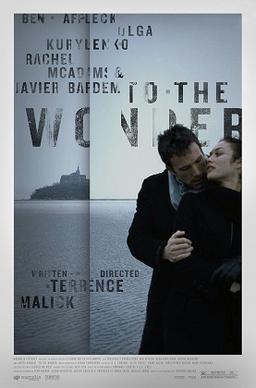
Disconnected: A review of "To the Wonder"


The Tree of Life was my favorite film of 2011. By far. I proudly stand by that statement even now. The more I think about it, the more it grows in stature for me. It didn't strike a chord with many people, like it did with me, but it certainly had its champions. Bottom line, I felt like Terrence Malick was really onto something. And luckily for us, the past few years Terrence Malick has been on a creative tear. It started with ToL and it continues with To the Wonder. It's the quickest turnaround he's ever had in his film career and he's shot two more films since he finished "Wonder." There's also his upcoming documentary "Voyage of Time." Needless to say, we got a whole lot of Malick to come. But, if "To the Wonder" is any indication of the direction he's going, is it a good thing that he's making films faster than he ever did before?

Before "Tree of Life", Malick always had a great backbone of a story to work with which allowed him to get as experimental as he wanted. There's a story in Badlands and Days of Heaven. There's narrative you're following even if it's not told in a typical way. But starting with Tree of Life, Malick threw away the narrative and went straight for emotion. A tone poem. In "The Tree of Life,", Malick was filled with big ideas. Ideas that were as big as ideas could get.

Now "To the Wonder" has big emotions, but not very many ideas. Instead, we're left with this couple played by Ben Affleck and Olga Kurylenko. They fall deeply in love in France, but when they move to Oklahoma, the relationship dries out slowly. They break up. Neil (Affleck) hooks up with an old flame (Rachel McAdams) while Marina (Kurylenko) is miserable and alone in Paris. When she comes back to Oklahoma, she and Neil get married, but they clearly aren't what they once were.

And what we see is a relationship in fast-forward. The good times feel as if they are fleeting, like heartbreak is inevitable. And like Tree of Life, there's a nostalgic feeling to it. Clearly, Malick is drawing from past experiences. This is, in many ways, a personal story. And like "Life," he puts his thoughts and memories up there on screen without necessarily giving those thoughts a strict coherence. "To the Wonder" feels like it has a lot to say about love, about relationships, about this relationship in particular, but unlike "Tree of Life," it doesn't really know how to express these emotions. In a way, that's intriguing in itself, but it's also extremely frustrating. It's not that we need to be told the whole story, but it feels like Malick is hiding something, emotionally. In "Tree of Life," it felt like he held nothing back. This time, there's a hesitance there. Following his boldest, most audacious film, he gives us his most contemplative film filled with uncertainty. Perhaps he's doing that on purpose, but there's a point where it just stops being compelling.

See, the first half of the film actually works really well in describing these feelings and exploring this relationship. But once Marina goes back to Paris with her daughter, the film kinda feels like it's struggling to find its way. The only really intriguing parts from here on out are the moments with Javier Bardem.

Javier Bardem's character deserves a movie all by himself. In fact, I could watch a tone poem just about this lonely priest who is constantly questioning God, his savior. He loves him, but he's found no evidence of him. And he's incredibly alone. He tries to help these people in Oklahoma, but he's not truly engaged with them. He tries to play the part by reading them passages, talking to them, but there's no real connection there. Occasionally he crosses paths with Marina and Neil, but his story feels separate. While there's a loose thematic connection of love and loss, in this case, the love of his savior, it just doesn't feel like this story connects as seamlessly as it could. I felt there had to be something more here, that it could've went even deeper.

Which is strange to say in a Malick film, since he tries to go as deep as possible. But it seems like, this time around, the film just doesn't have a central focus. It feels like Malick has something more to say about these characters and their relationship, but he doesn't say it. There's just this collection of narrative thoughts that don't really distinguish themselves from past Malick films. At the end, I felt like Marina's daughter. Yes, this is a Terrence Malick film, but something is missing. Something that made his other films so special and such a joy to watch. Here, there's just this meandering, aimless feeling. I still admire the film, to a fault, but whereas Malick would often find something beautiful in the editing room with his other films, it just feels like he couldn't quite pull it off this time around. So while the end result may be meaningful to him, it fails to connect. Not that it fails to connect with the audience, rather, I think the film fails to connect with itself.

Maybe it was a good thing that Malick took a long time between films before. Maybe he needed all that extra time to really focus and put his heart into that one project at that point in time. It doesn't feel like he does that here and I worry his other films may suffer from the same problem if they are as experimental as this one is. Actors keep talking about how great Malick's scripts are, yet he insists on turning his films into something entirely different in the editing room. I'm not trying to imply that I want a more conventional Malick film, but "unconventional Malick" is actually beginning to feel... conventional. 

Grade: C

Wednesday, May 1, 2013

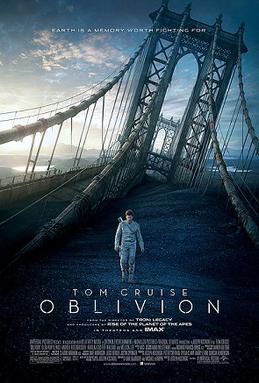
Oblivion review


So let's talk about "Oblivion," the Tom Cruise-starring, Joseph Kosinski-directed sci-fi action spectacle. I call it a spectacle because, visually, this thing is out of sight. I have read some criticisms about an over-abundance of CGI in the film, that may be true, but damn they make it look gorgeous. Big reason for that is the cinematographer, Claudio Miranda. He just won an Oscar for DP'ing "Life of Pi" so this guy knows how to make digital look beautiful. He pulls it off again here.

Beyond that, the film actually succeeds in being engaging and, for the most part, entertaining. Tom Cruise is great here, as Jack Harper. He's a drone repairmen, one of the last stationed on Earth. He works with Victoria (Andrea Riseborough), who's also his romantic partner. Harper may know how to repair drones and fly an awesome spaceship, but he's very much an old-school, classic average American male... type... guy. You know, loves sports, the outdoors, Led Zeppelin, all that. He knows he has to leave Earth soon, but he doesn't really want to even if most of it has been destroyed. He can't get Victoria to see it his way, unfortunately, as she constantly tries to keep him in check.

But Harper will soon discover that there is more going on here, of course. Things aren't what they seem. The people he works for had his memory wiped, so he doesn't remember anything beyond the last few years. Still, he constantly has visions of a seeing a woman near the Empire State Building. A woman he feels he must know. But who is she?

Ok, enough plot description. Or else we'll get into spoiler territory. Oblivion succeeds because it gives its main character enough room to explore from an emotional standpoint. You want Harper to succeed, you care about his plight. Unfortunately, this is one of those sci-fis that picks and chooses what it wants to explain to you. We go through moments where we are inundated with exposition. But it's only enough exposition to help the character get from point A to B, leaving certain details of the story feeling rather... confusing. Like it doesn't all really add up. The character's story, for the most part, adds up, but you can't help but feel like there's something more interesting going on here that they're not telling us. That's the problem with a lot of sci-fi. You can either choose to tell the audience as little as possible, or as much as possible. It's when you get into those gray areas where things tend to get murky and that's the main problem with "Oblivion."

Because, otherwise, you can forgive the rather wooden acting from most of the cast, excluding Cruise and Riseborough. You can exclude the fact that Oblivion "borrows" many plot elements from a lot of other, better sci-fi films, making this a weird mix-match. Or hodge podge. Or whatever silly sounding word fits best there. The writers borrowed from those sources without really giving "Oblivion" its own distinct identity. I went into the film being entertained by Tom Cruise and his character, but left the movie wondering what the hell was going on with the rest of the film.

Plus, while the film does have its moments of action, and while I appreciate its measured pace, it doesn't really end with as big of a bang (no pun intended, for those who have seen it) as one would hope. So, overall, we're left with a pretty "nice" story with a great lead character, with not much else in between. See "Oblivion" to be entertained by Tom Cruise for two hours (if that's your thing), but don't expect much beyond that... aside from the awesome visuals. It's a good movie, better than others make it seem, but compared to other potential delectable desserts that we have coming this summer, "Oblivion" feels like a thin slice of cheesecake. It tasted ok, but by the time the banana split comes around, you'll forget all about it. Actually, I don't think that analogy makes much sense. I think I just made myself hungry.

Grade: C+

Wednesday, April 17, 2013

42 Barely Crosses Home Plate, but is a Must-see for Kids


There's no mistaking it. "42" is, for sure, a crowdpleaser. It has all the right elements: a sympathetic hero, love interest, forced to do the impossible, and ultimately succeeds. Of course, what separates "42" from other similarly-told stories is that this actually happened. When Jackie Robinson stepped onto Ebbets Field on opening day 1947, it changed America. Integration in baseball was forced upon everyone, it was a hard pill to swallow for some but they had to swallow it nonetheless. Jackie was the catalyst and remains one of the most important figures in sports history. "42" does a good job of telling the basic story and it is a must-see for the young ones who may not know much of the Robinson story. Still, it's tough to see Jackie Robinson be relegated to this archetypal, Disney-esque, extremely sanitized "hero" role here.

I am sure there are plenty people my age and older who know the Jackie Robinson story well, but in case you don't, I'll let you in a little bit on the story. Brooklyn Dodgers team executive Branch Rickey wants wins, he wants that World Series prize. He knows that in order for his team to reach the next level that he'll have to integrate his team. Black people playing in the MLB hasn't happened yet, but some players admit that it's more-or-less an inevitability. Rickey makes the inevitable happen. He signs Robinson to play for his minor league team, the Montreal Royals.  When Robinson breezes through the minor leagues his first year, he's called up to the Dodgers that next year, in 1947. Now Robinson, donning the 42 for the first time, will officially make history.

And the film tells that story fairly accurately, a big reason why I think the film is a must-see for kids. It could be really inspirational and it, of course, is already getting a big response from audiences garnering an A+ cinemascore this past weekend. But where I find fault with the film is how it manages to structure itself into the most typical of Disney sports movies (and this was made by Fox, mind you). For such a specific story, with such great, real life characters, only Chadwick Boseman manages to make his portrayal of Jackie Robinson more than just a cliche. His teammates are almost uniformly one-dimensional. Harrison Ford's Branch Rickey is an inspired performance, but also incredibly hammed up. I'm glad Ford tried to go all in and really give Rickey some life, but something faltered along the way whether it's the dialogue or just the fact that Ford's mannerisms get too much in the way of this real life portrayal. Ford is mostly fun to watch as Branch Rickey, but there are times when he comes off as a complete caricature.

The film also has some really forced, cringeworthy moments involving people in the stands or any of its attempts to showcase how Jackie Robinson touched the hearts of his fans. Robinson was considered the number two most popular figure in all of America in 1948 and it just seems like we're not being shown enough of the story. The story from both sides of the racial barrier. While it's important to show how Jackie Robinson touched African-American youth, it's just as important to show how he managed to get the majority on his side. Robinson definitely got his share of death threats, countless death threats. Threats to his son, to his wife. That's important to show too. But it would've been more inspiring to get a fuller picture. Because you don't become the most popular sports figure in all of America unless a great number of people are on your side, black or white. The story we ultimately get in "42" is so basic and trite that it takes away from how special Jackie Robinson's barrier-breaking story really is.

Overall "42" still works and is enjoyable on a basic level. I definitely recommend it as a family movie. But if you're a baseball fan, or if you really want to learn about the Jackie Robinson story, you're not going to get a very in depth look here. The story's structure has been way too generalized to make it feel special or separate from other baseball movies. Robinson deserves better than this. But we'll have to take the film for what it is, and it's not a bad film. It's just average. The fact that Jackie Robinson is such an important figure though is why this film should still be seen, especially for the kids.

Grade: C+


Wednesday, March 27, 2013

The Place Beyond the Pines review


"The Place Beyond the Pines" opens with a long tracking shot, following Luke (Ryan Gosling) across a county fair to the motorcycle stunt show that he stars in, "Luke & The Heartthrobs." From the beginning, Luke lives on the absolute edge, not thinking about tomorrow. For the next two hours and twenty minutes, director Derek Cianfrance takes on a long journey that spans across 15 years where we get to see the consequences of people's actions. Kneejerk decisions that will forever haunt these characters for the rest of their lives.

"Pines" starts its yarn-spinning story with Luke. When he finds out that a fling he had with a former lover (Eva Mendes) has resulted in a baby boy, suddenly Luke begins to think about the future. Not having his own father in his life has haunted him, and now he wants to make sure his son doesn't go through the same thing. But Luke does not have many skills beyond his motorcycle riding. He meets up with Robin (Ben Mendelsohn) who gives him a job, not paying him much. Robin used to be a bank robber but has long since quit that racket. Still, when Robin casually brings up his criminal past, Luke immediately wants in. So they start robbing banks together. Luke wants to give his son everything that he can possibly give him, but does not begin to realize the consequence of his actions until it's much too late.

Luke's crimes put him on a collision course with rookie cop Avery Cross (Bradley Cooper). Avery also has to deal with the consequences of his actions. He sees the corruption that goes on in the police force and wants to change things, much to the chagrin of his fellow officers. Avery's bravery in action has lead the town of Schenectady, New York to think of him as a hero. We watch Avery as he rises from rookie cop to Attorney General. But his ambitions is met with obstacles that forever change his fate.

I'm dancing around a lot of key plot details so that's as far as I'll go. But The Place Beyond the Pines does a superb job of telling this story that links multiple characters in this small American town. Once again, Cianfrance gives us incredible insight into these families. He did that with "Blue Valentine" and here it's done to a much more epic scale. Indeed, "Pines" raises the stakes on pretty much every level, compared to "Blue Valentine." I did not give a full review of Blue Valentine, but I admired it greatly. I wasn't completely floored with it, but I knew Cianfrance had the potential to make something even greater. He does so here, absolutely.

Everything from the beautiful cinematography to the unbelievably intense acting from everyone involved, The Place Beyond the Pines makes its mark as one of the best films of 2013 so far. Bradley Cooper showed his potential in "Silver Linings Playbook" but he's way better here. It's also nice to see Ben Mendelsohn in another great role. Every decade always seems to have a ubiquitous character actor who shines in every movie they're in, Mendelsohn is becoming one of those actors.

Is "Pines" perfect? Not exactly. Because of its three-story structure, some aspects of the story feels more rushed than others. But Cianfrance tries something that other directors would never dare to try, with this particular story, this was an incredibly difficult story to pull off. Cianfrance went above and beyond, for sure.

Grade: A-


note: Sorry for the lousy review. This movie deserves much better. But seriously, this is a must-see. That's all that needs to be said.